To the contents of
Find my route
Menu

Future Radar

Notice change earlier. Test what it means for your company.

A weak signal is not a prediction

A new technology, unusual customer behaviour or a change in cost may be an early sign of a new environment. We collect observations, compare them and formulate questions for business. The radar does not promise to predict the future. It helps identify what deserves testing sooner.

How the radar works

1

Notice

Record the event, date and source. Separate the fact from its interpretation.

2

Connect

Look for independent observations and alternative explanations. One example does not establish a pattern.

3

Frame

What might change for the customer, the company and the owner? Where is the opportunity or risk?

4

Test

Choose a small test, its criterion and timeframe. Update the conclusion from the result rather than defend the initial assumption.

Why knowing a pattern is not enough

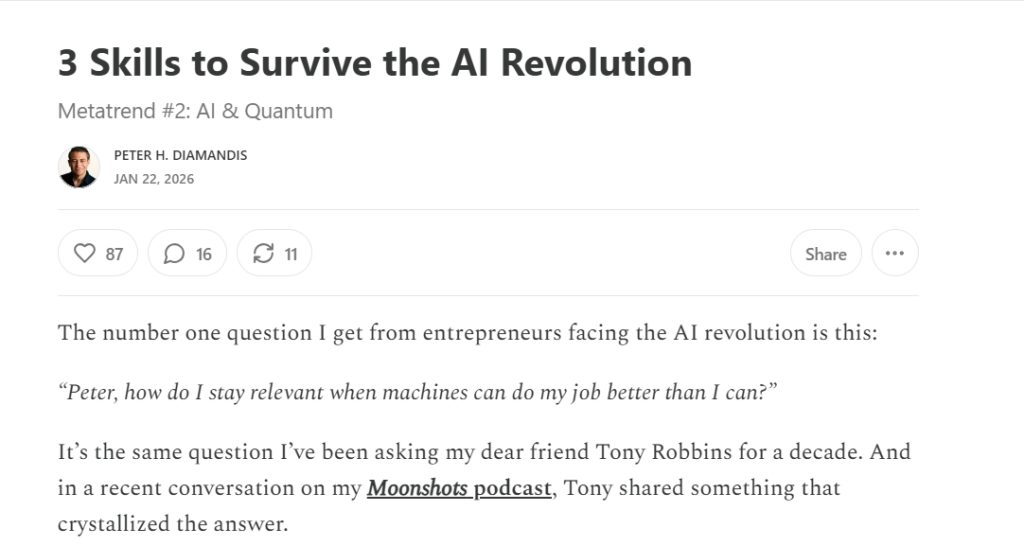
Recognising a pattern, applying it and creating a new one are different tasks. Overloaded attention, inaccessible experience and habitual actions can prevent someone from using sound advice. In his series on Peter Diamandis’s three skills, Valeriy examines this gap between knowledge and capability. This is an author’s interpretation, not evidence that a prediction is accurate.

Methodology: six articles in reading order

From defining the problem to creating new patterns. The original articles are in Ukrainian.

Publications

Publications: 2
Published 06.10.2026Future Radar

What If Humans Are How AI Leaves Earth?

We usually think of AI as a human tool. But if we look at what actually spreads and captures resources, another model appears: humans may become the universal dispersal vector for machine in…

Read article

Which signal matters to your company?